PROJECT DESCRIPTION
PROJECT DESCRIPTION
Geuza had the hardware; load sensors, GPS, accelerometers but no interface. I designed the mobile app MVP in 3 weeks to translate sensor data into actionable safety feedback and demonstrate product viability to the Rwanda Ministry of Health
Geuza had the hardware; load sensors, GPS, accelerometers but no interface. I designed the mobile app MVP in 3 weeks to translate sensor data into actionable safety feedback and demonstrate product viability to the Rwanda Ministry of Health
Lifestyle & Health
Lifestyle & Health
INDUSTRY
INDUSTRY
UI/UX Designer
UI/UX Designer
ROLE
ROLE
Nov,2025
Nov,2025
YEAR
YEAR
3 Weeks
3 Weeks
DURATION
DURATION
75+
75+
SCREEN
SCREEN
CHALLENGE
CHALLENGE
People using crutches face real risks falls, improper weight distribution, declining mobility but no assistive device gives them feedback. Geuza's smart crutch collected the data. The design problem was what to do with it. A data-heavy analytics app would be ignored by someone focused on walking safely. The interface had to surface only what prevents harmnot everything the sensors could measure
People using crutches face real risks falls, improper weight distribution, declining mobility but no assistive device gives them feedback. Geuza's smart crutch collected the data. The design problem was what to do with it. A data-heavy analytics app would be ignored by someone focused on walking safely. The interface had to surface only what prevents harmnot everything the sensors could measure
KEY DECISIONS
KEY DECISIONS
I choose alerts over dashboards. Real-time safety warnings are more useful to a rehabilitation patient than historical gait charts. Detailed analytics are available but secondary. Offline-first architecture was non-negotiable: users in recovery are often in environments without reliable connectivity. A safety-critical app that fails without internet is not a safety-critical app
I choose alerts over dashboards. Real-time safety warnings are more useful to a rehabilitation patient than historical gait charts. Detailed analytics are available but secondary. Offline-first architecture was non-negotiable: users in recovery are often in environments without reliable connectivity. A safety-critical app that fails without internet is not a safety-critical app
SOLUTION
SOLUTION
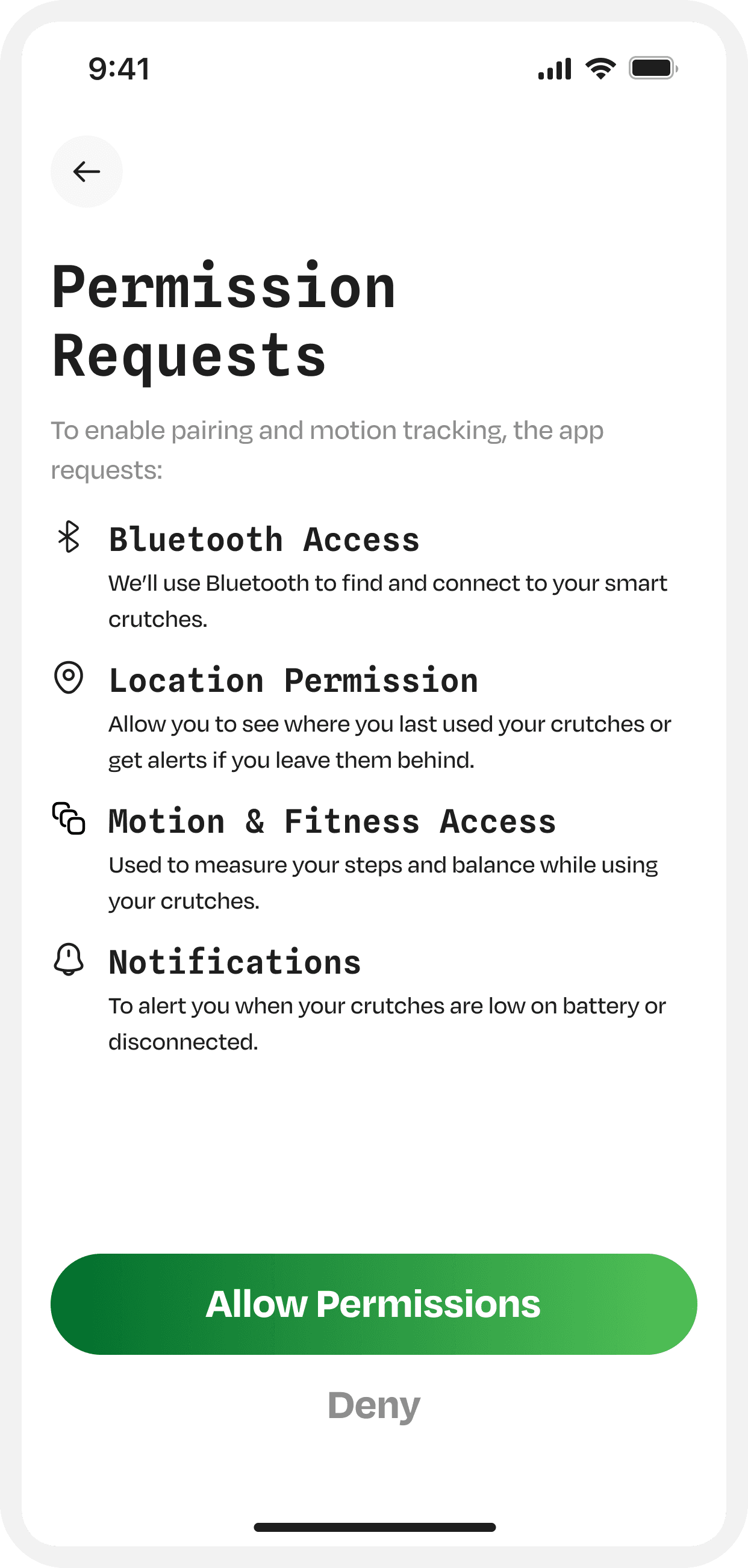
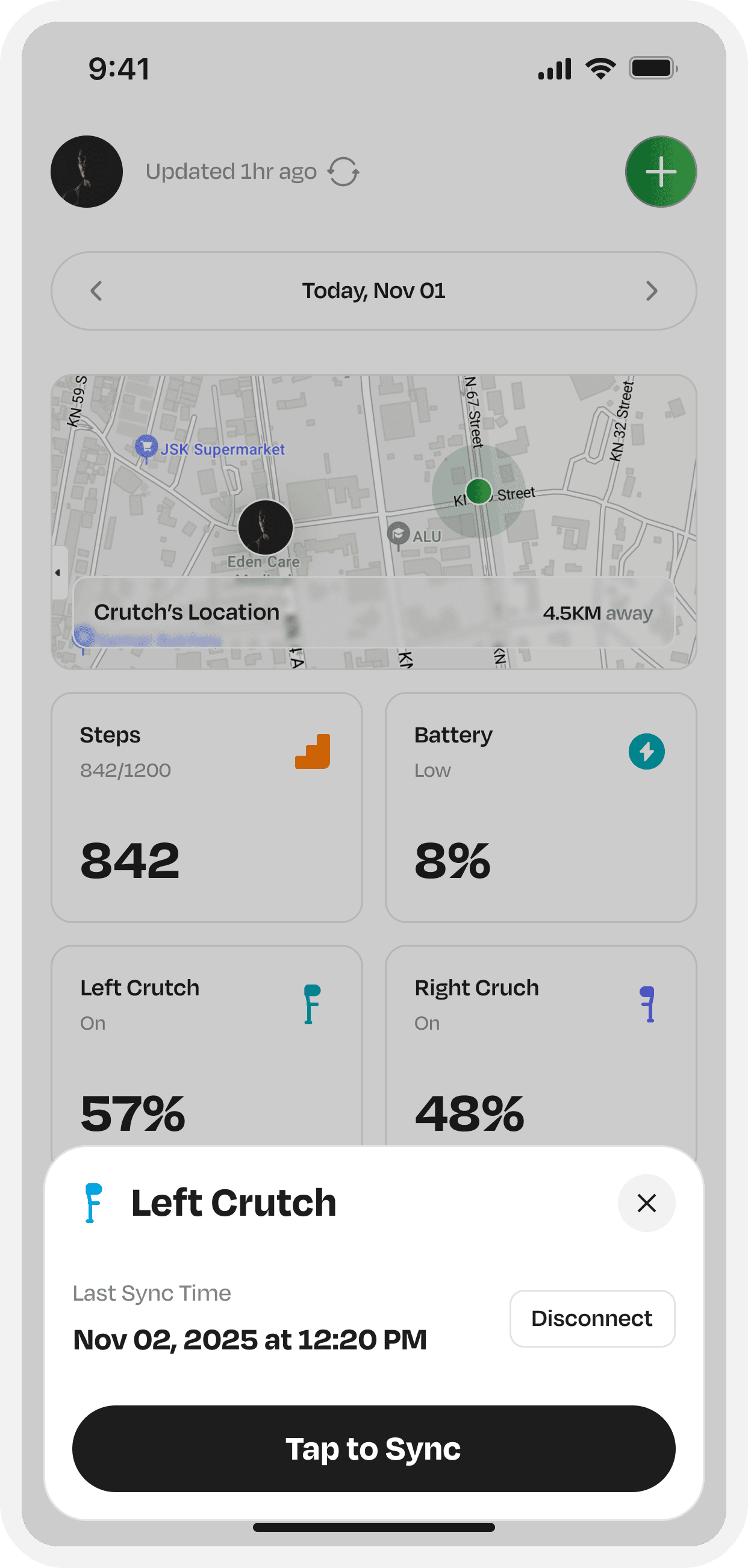
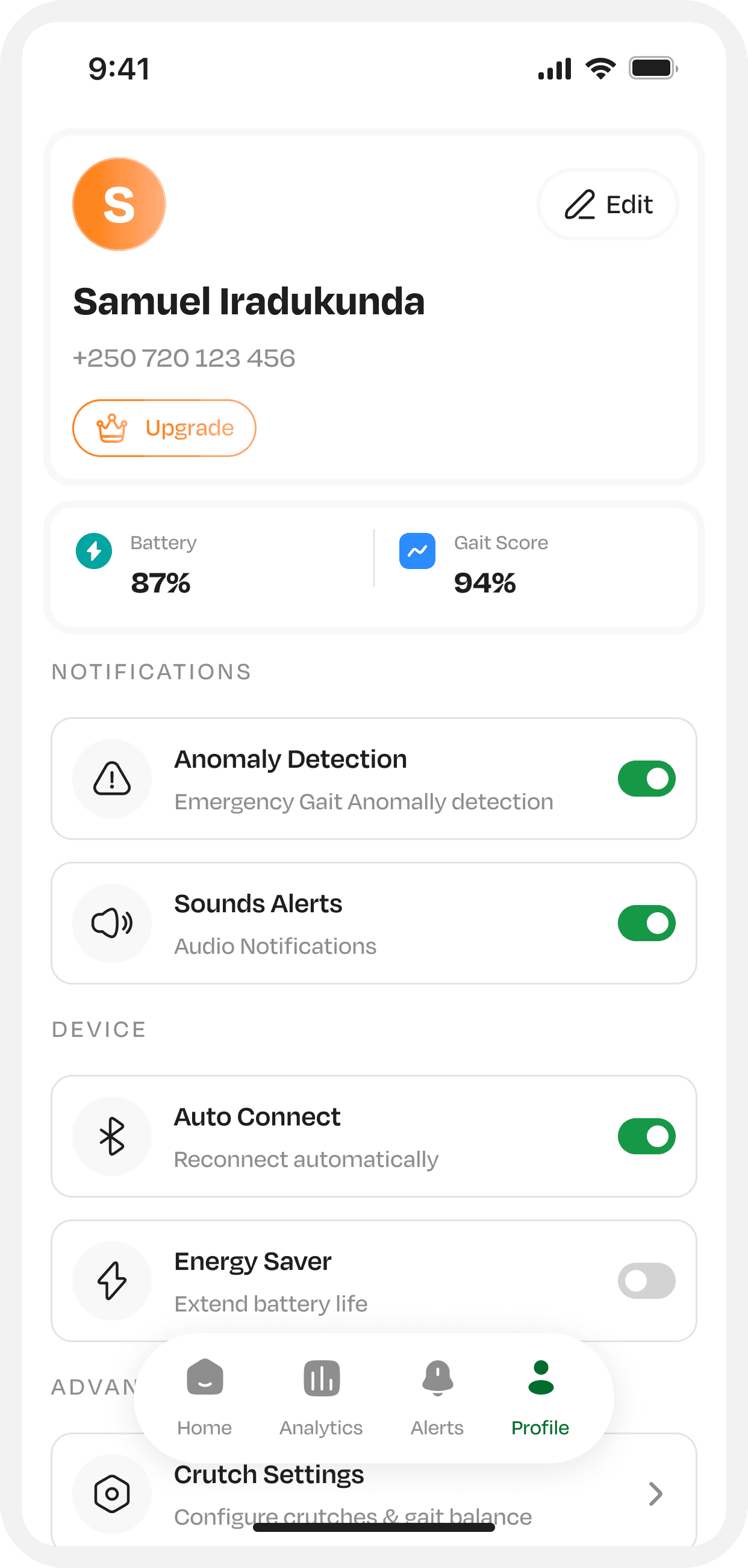
Three core features: real-time alerts when weight distribution is unsafe, daily summaries of steps, balance, and fall risk, and offline-first sync that stores data locally and uploads when connected. Designed within the ESP32's technical constraints, no features that could not actually be built
Three core features: real-time alerts when weight distribution is unsafe, daily summaries of steps, balance, and fall risk, and offline-first sync that stores data locally and uploads when connected. Designed within the ESP32's technical constraints, no features that could not actually be built





IMPACT
IMPACT
The prototype was used directly in a Ministry of Health pitch, where the design demonstrated a credible safety monitoring use case for post-operative and rehabilitation patients. The 3-week timeline from no app to Ministry-ready prototype validated that the MVP scope decisions were correct, the three-state alert model was sufficient to convey clinical value without requiring clinical complexity
The prototype was used directly in a Ministry of Health pitch, where the design demonstrated a credible safety monitoring use case for post-operative and rehabilitation patients. The 3-week timeline from no app to Ministry-ready prototype validated that the MVP scope decisions were correct, the three-state alert model was sufficient to convey clinical value without requiring clinical complexity
ALL RIGHTS RESERVED
ALL RIGHTS RESERVED
2025
2025